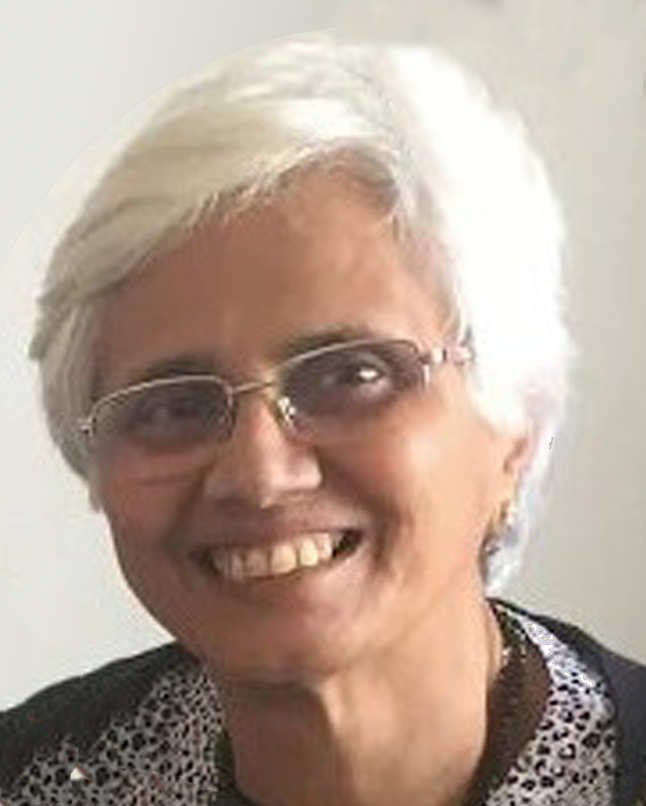
Nina P. Nayak
Imagine a little girl, eyes wide with wonder, trying to decode the mysteries of family, love, and belonging. That was me—long before I ever stepped into the world of child adoption and child protection. This was never part of my childhood dream. I imagined becoming a doctor or a teacher. Yet, early encounters quietly planted the seeds of what would become my life’s work, making me question what truly makes a family.
I was about eight when a classmate whispered that her mother had “given away” her youngest sibling to a childless aunt and uncle. Later, I overheard my mother speak of a couple praying at a temple for a child—only to return months later with a lively little boy adopted from an orphanage. The word lingered in my mind. My ideas of orphanages came from fairy tales and comic strips. Did children miss their birth families? Could love really move from one home to another?
In high school, a friend confided that the people she called her parents were actually her maternal aunt and her husband who had taken her in when she was four. One among five sisters, she had simply run into their arms when asked, “Who wants to come with us?” That spontaneous choice changed her life. I wondered—where did she belong? Did she still see her sisters? What did she call both sets of parents?
Those questions followed me into adulthood. Literature like David Copperfield and Oliver Twist deepened my curiosity about children growing up without families. During my days with the Rotaract Club while doing my postgraduate studies in social work, visits to orphanages—especially during festivals—were deeply unsettling. The children were no different from those I knew, except that their lives were shaped by regimentation and impersonal care. Their eyes reflected sadness and heartbreak.
One early case altered my understanding forever. A three-year-old girl, Savithri, was found beside her deceased father, a snake charmer. With no relatives to claim her, she was placed for international adoption. I was sceptical. Could a child thrive so far from home? Months later, photographs arrived from Denmark showing a radiant child embraced by loving parents. That moment taught me that family is not about blood—it is about belonging.
Marriage brought personal choices alongside professional convictions. My husband supported my desire to adopt without hesitation, though extended family members worried about “unknown lineage.” Fate intervened when I served as power of attorney for a Danish couple adopting a three-year-old named Shaila. Fostering her briefly, and watching my husband play with her, dissolved all doubts. When I finally handed her over to her parents—ordinary people who had saved every penny to give a child a home—I felt the quiet power of love beyond borders.
Five years later, we adopted our daughter, a fragile six-month-old with an irresistible smile. Initial resistance from my mother-in-law soon melted into devotion; within weeks she was crocheting clothes and proudly showing off her granddaughter. When our son arrived five years later, he was welcomed unquestioningly. Watching prejudice dissolve in the presence of love was one of life’s enduring lessons.
My professional journey mirrored my personal one. As Manager of a long-established orphanage in Bengaluru, I entered a system that relied on long term institutional care as the primary response for children in need of care and protection. Donors funded buildings, not families. Children entered and very few returned to families or were placed in adoption. I began asking uncomfortable questions—why weren’t proactive efforts made to trace and reunite children with families? Why wasn’t adoption explored for girls, older children and those with correctable disabilities? Gradually, I shifted the narrative from institutions to families, from long-term care to permanency.
Kolkata marked a turning point. Following the 1984 Supreme Court judgment in Laxmikant Pandey vs. Union of India, adoption practices were scrutinized nationwide. As the Secretary cum social worker at the Society for Indian Children’s Welfare (SICW), an adoption placement agency, I witnessed every emotion—grief or relief of birth parents relinquishing children, hesitation of adoptive parents, and joy at each successful placement. Domestic adoptions were challenging amid secrecy and stigma, but every child placed into a family felt like a victory for their rights.
Collaborations with Swedish and American agencies allowed placements of older children, siblings, and those with special needs—children most often languishing in child care institutions and overlooked. With donor support, SICW also introduced vocational training for long term institutionalized youth, planting early seeds of de-institutionalization and dignity in adulthood.
Returning to Bengaluru, I piloted programs to move children from large state institutions into families through reintegration, foster care, or adoption. Resistance was strong, outcomes mixed, but each child who found family life reaffirmed my belief that children need love, not merely care.
India’s ratification of the UN Convention on the Rights of the Child in 1992 became my compass. “Institutional care must be the last resort,” I often reminded colleagues. Around this time, I served as Secretary of an international working group under the aegis of ICSW Sweden drafting The Child’s Right to Grow Up in a Family, published in four languages. It connected grassroots Indian work to global standards.
Across India, professionals began questioning institutional models. Partnerships with UNICEF, CRY, and others helped influence reforms and amendments to the Juvenile Justice Act, embedding family-based care into national policy.
In the 2000s, I moved into statutory roles—Chairperson of the Child Welfare Committee, Bangalore Urban; later, first Chairperson of the Karnataka State Commission for Protection of Child Rights; and Member (Juvenile Justice) at the National Commission. Across roles, my focus remained the same: child-centric, non-institutional rehabilitation with accountability.
Through it all, raising two adopted children grounded every policy decision. My daughter, now an artist, teacher, and mother, and my son, a former state-level badminton player and now a finance professional abroad, embody adoption as mutual transformation. Today, three grandsons—each unique and full of promise—allow me to relive childhood anew, this time as a grateful grandparent.
Meeting adult adoptees in the USA (2017)and Sweden (2024)—children whose journeys I once facilitated—was deeply affirming. Most spoke of love and belonging; a few expressed a quiet longing for their roots. Seeing them thrive as adults was the greatest validation of my life’s work.
Over five decades, language and understanding evolved—from “orphans” to “children in need of care and protection,” from “charity” to “rights”, from “institutions” to “families”. My journey began with childhood curiosity and grew into a lifelong mission: ensuring every child’s right to belonging.
This is not just my story. It is the story of countless individuals who chose love beyond blood and proved that family is not a privilege—but a right.
*************
About the Author:
Nina P. Nayak is a child rights advocate with over four decades of experience in child rights, adoption, and alternate care. An adoptive parent and policy contributor, she has served in the non-governmental sector, held key statutory positions and continues to work towards ensuring that every child grows up in a family environment of love and belonging.
Dr Nilima Mehta
Doctorate in Child Adoption
Dr Nilima Mehta has done extensive work in the area of Child rights, Child protection, Family Based alternative care like Adoption, Foster Care and Family Counselling. Dr. Nilima has a Doctorate in Child Adoption in India and has worked in the field of adoption for over forty years. She is Psychotherapist and specializes in counselling birth parents, Pre and Post adoption counselling for adoptive parents and “Search for Roots” counselling of adoptees. Dr. Nilima is the author of “Ours By Choice – Parenting through Adoption”
Dr. Nilima is associated with the State and Central government for policy development, training, research and review of National Legislations. She has been a member of Juvenile Justice Act Review committee, Govt. of India. She has been an advisor and a consultant with several organizations like UNICEF, CRY, CHILDLINE, ICSW, ICCW, IAPA, FSC. She has been first Chairperson of the Child Welfare Committee (CWC), Mumbai. Dr. Mehta has been the Chairperson of the Training & Development Committee of CARA, Member of CARA Adoption Advisory Committee, and is currently on the Sub-committee for training of social workers and mental health professionals. Dr. Nilima has been the Chair professor at TISS and currently is a visiting professor at TISS and NN, Mumbai University.
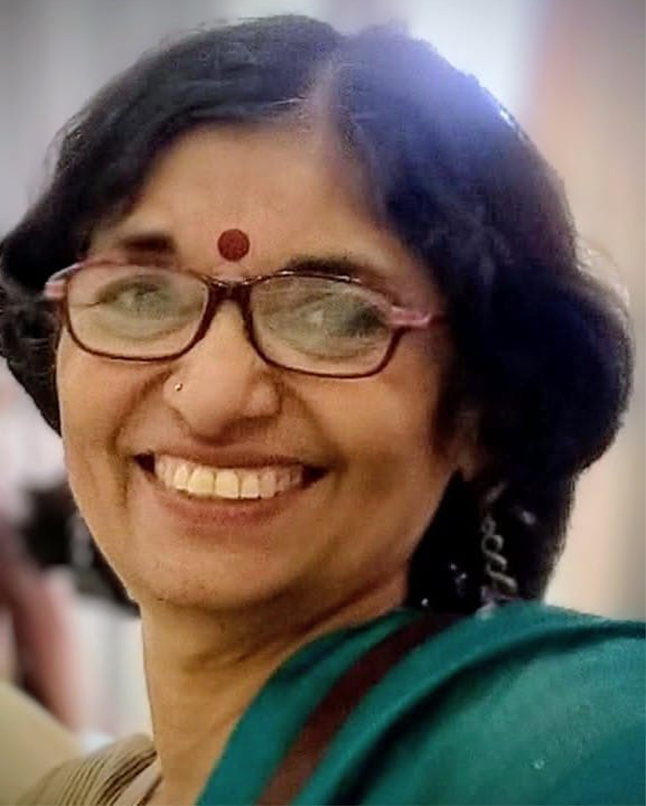
Dr. Vinita Bhargava
Professor at the Department of Human Development and Childhood Studies
Dr. Vinita Bhargave retired as a Professor at the Department of Human Development and Childhood Studies at the Lady Irwin College, University of Delhi, where she taught courses in Human Development, Child Rights, Early Childhood Education, and Statistics & Research Methods. Prior to joining Lady Irwin College in 1986, she worked with the Social Work and Research Centre, Tilonia, Rajasthan (1979-82) and the Institute of Social Studies Trust, New Delhi (1982-84). She has undertaken various research projects with the University and UNICEF.
She has been working with various agencies in the field of adoption policy and practice in India since 25+ years. She was a founder member of the Central Adoption Resource Authority (CARA), Government of India, and the “NOC” committee member for screening applications for inter-country adoptions. She has contributed significantly to national policies on adoption. Currently, she is on CARA’s committee for training Government functionaries on the importance of Counselling stakeholders in the area of Adoption.
She has been Lecturer in charge of the Rajkumari Amrit Kaur Child Study Centre at the Lady Irwin College and held executive positions in the All-India Women's Education Fund Association. She was a member of the committee for drawing up the National Guidelines for setting up and running crèches under the Maternity Benefit Act 2017, for which she was given the Award for Excellence 2019 by Deendayal Upadyaya Smriti Manch.
She has written numerous papers and reports, as well as a manual for trainers in Early Childhood Development for the Government of the Maldives. Her latest book is called “Adoption in India: Evolving Policies, Parenting Experiences and Adoptee Narratives,” published by Routledge in 2025. Her earlier book was entitled “Adoption in India: Policies and Experiences”, published by Sage Publications in 2005. This has been translated into Tamil by Vikatan Press and is entitled “Sweekaram”.
She has founded a support group for adoptive parents called APNA (Alternative Parenting Network Association) in New Delhi. Currently, she undertakes training programmes on child protection, pre- and post-adoptive counselling for parents and children.